From Process to Impact: Building Systems That Deliver Social Good Faster
Rethinking How We Deliver Social Impact
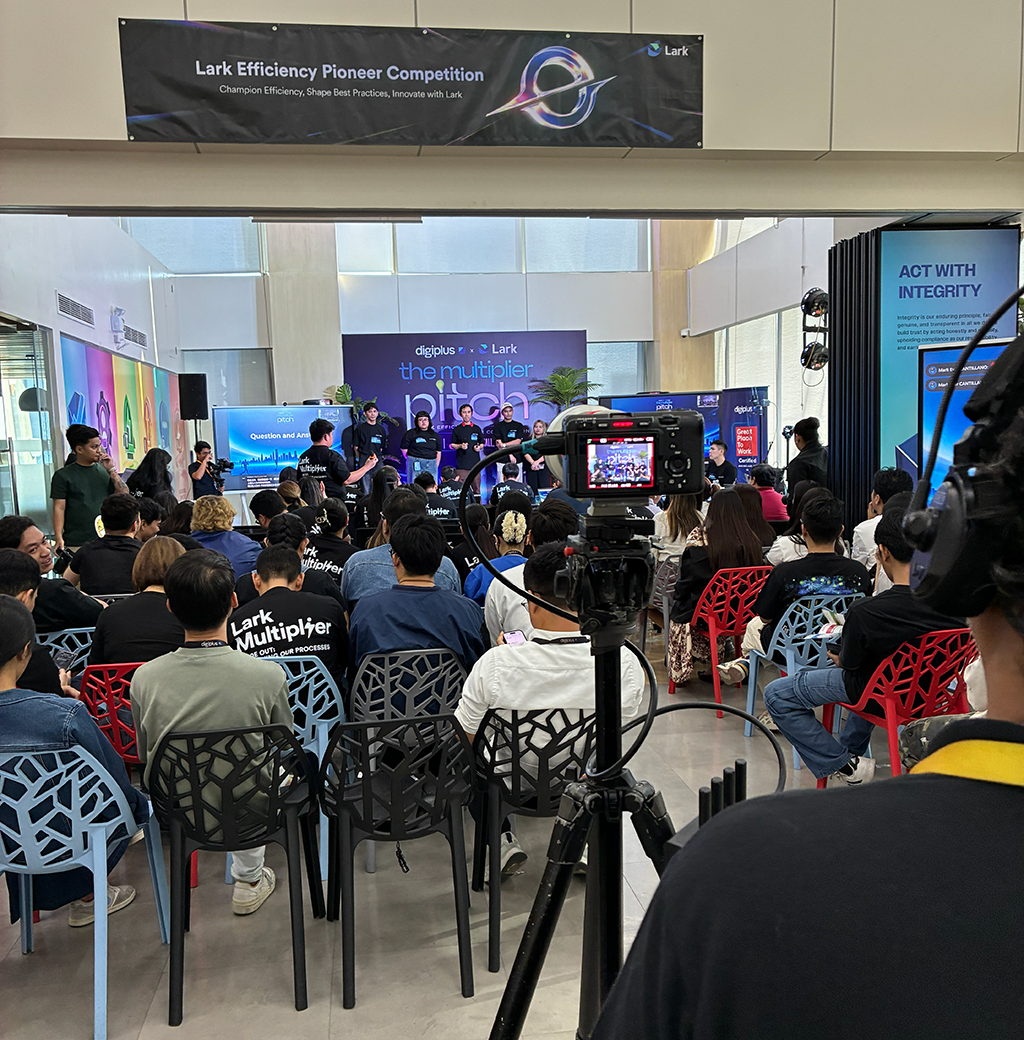
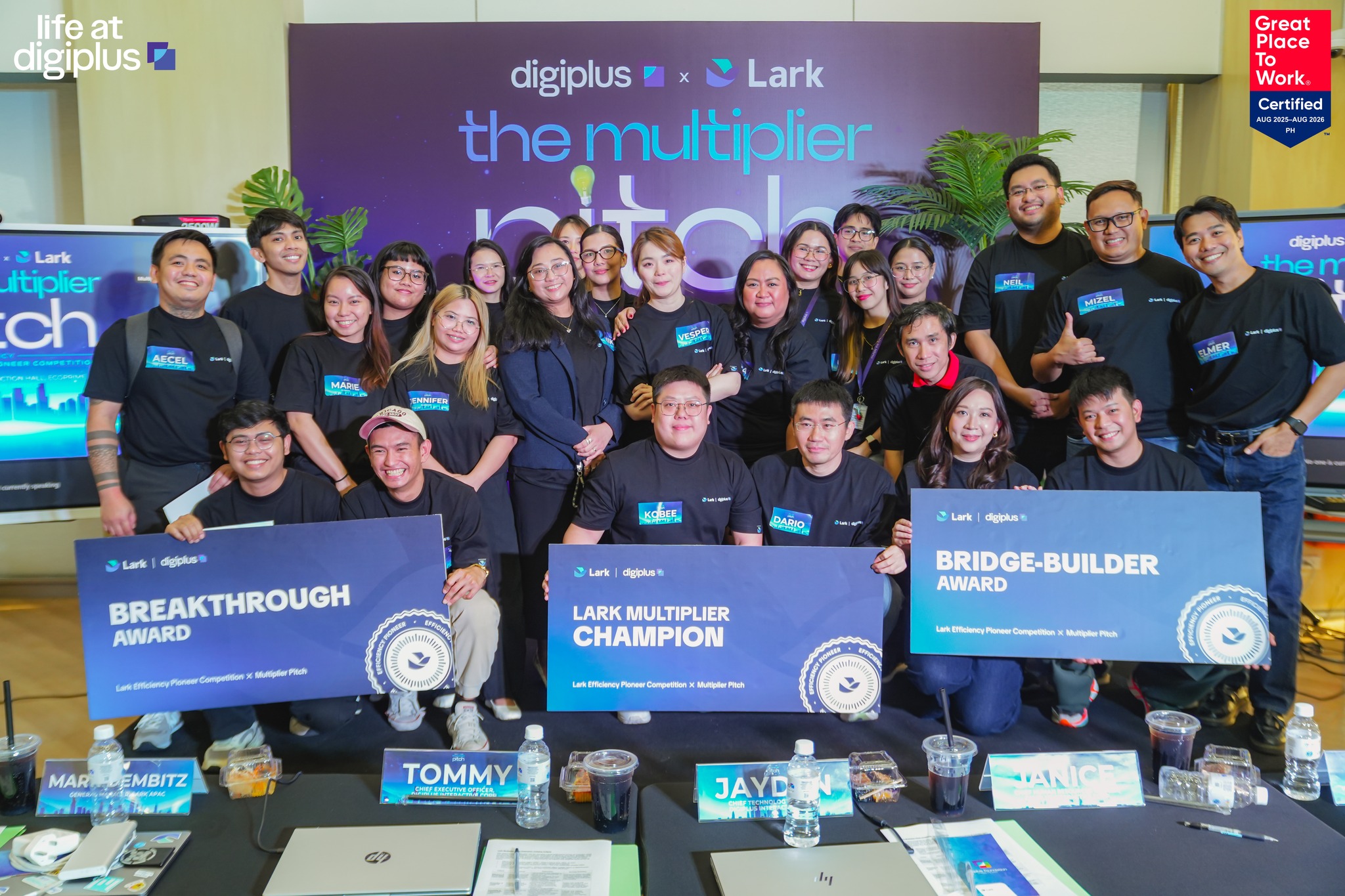
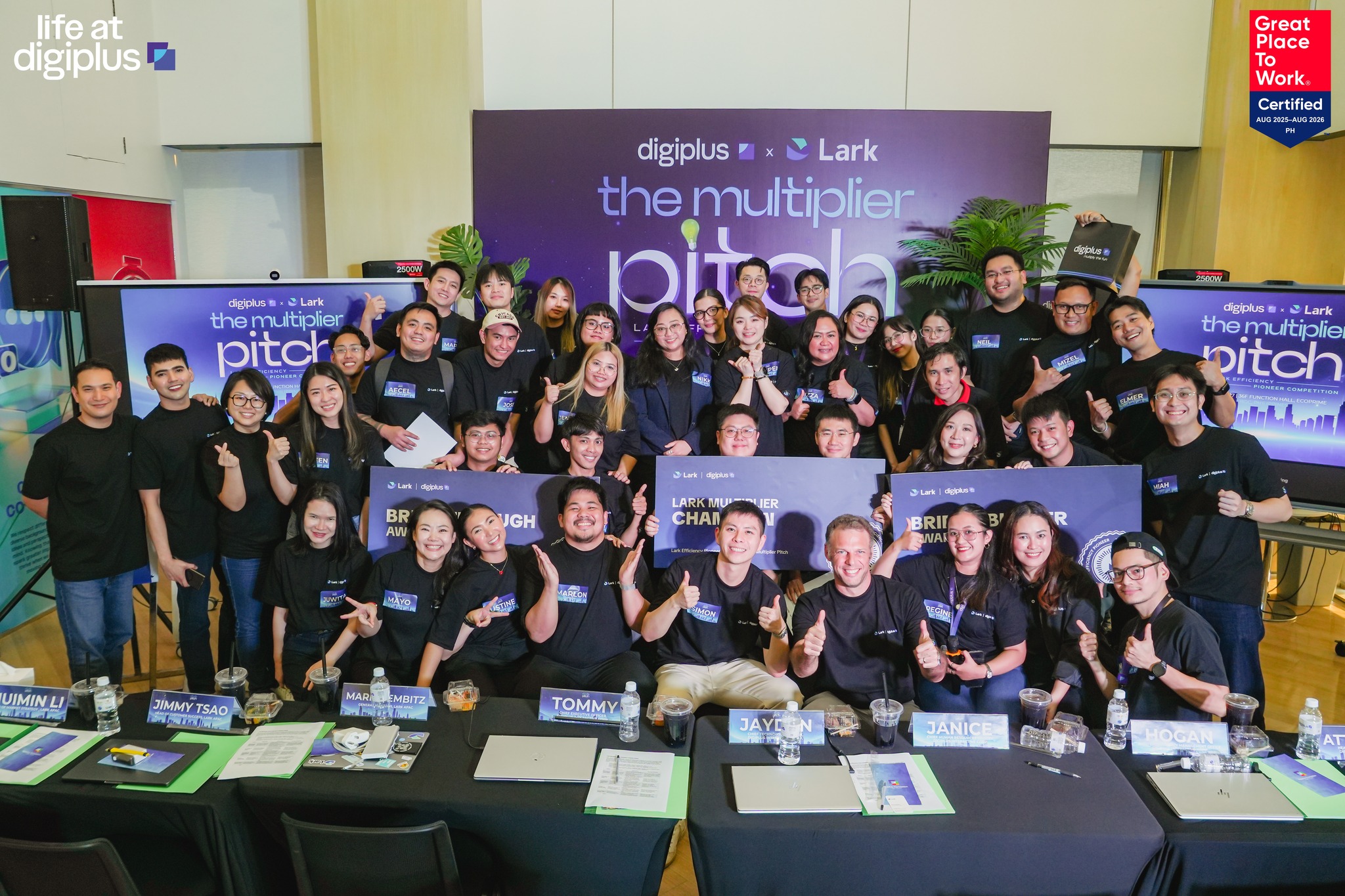
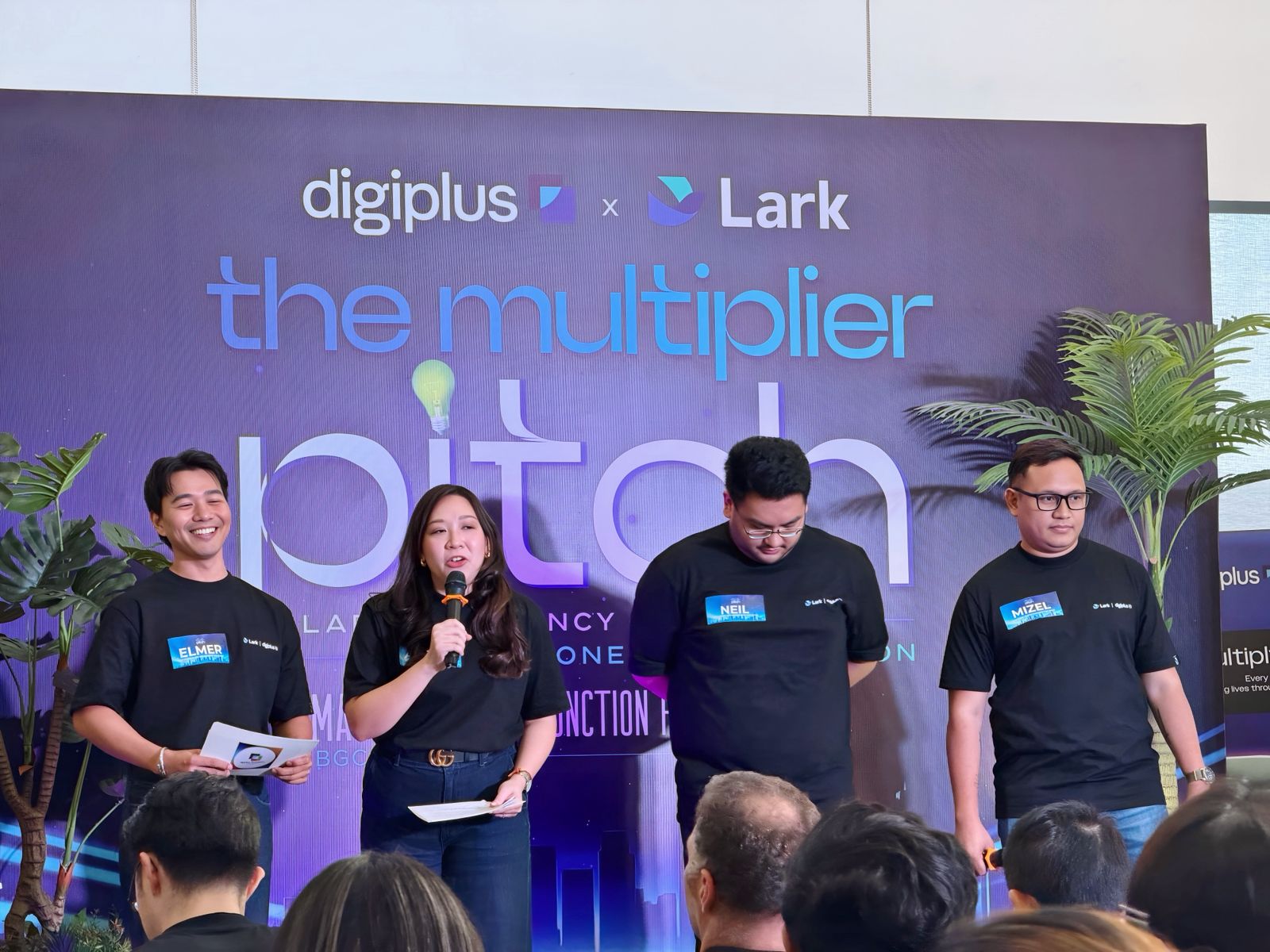
In March 2026, our team joined The Multiplier Pitch, part of DigiPlus‘ Lark Efficiency Pioneer Competition. The 10-week, company-wide initiative carried the theme “Inside Out: Rethinking Our Processes.” More than 100 participants across over 20 teams explored ways to improve internal efficiency and strengthen business capabilities. The challenge encouraged us to rethink existing systems and develop practical solutions.
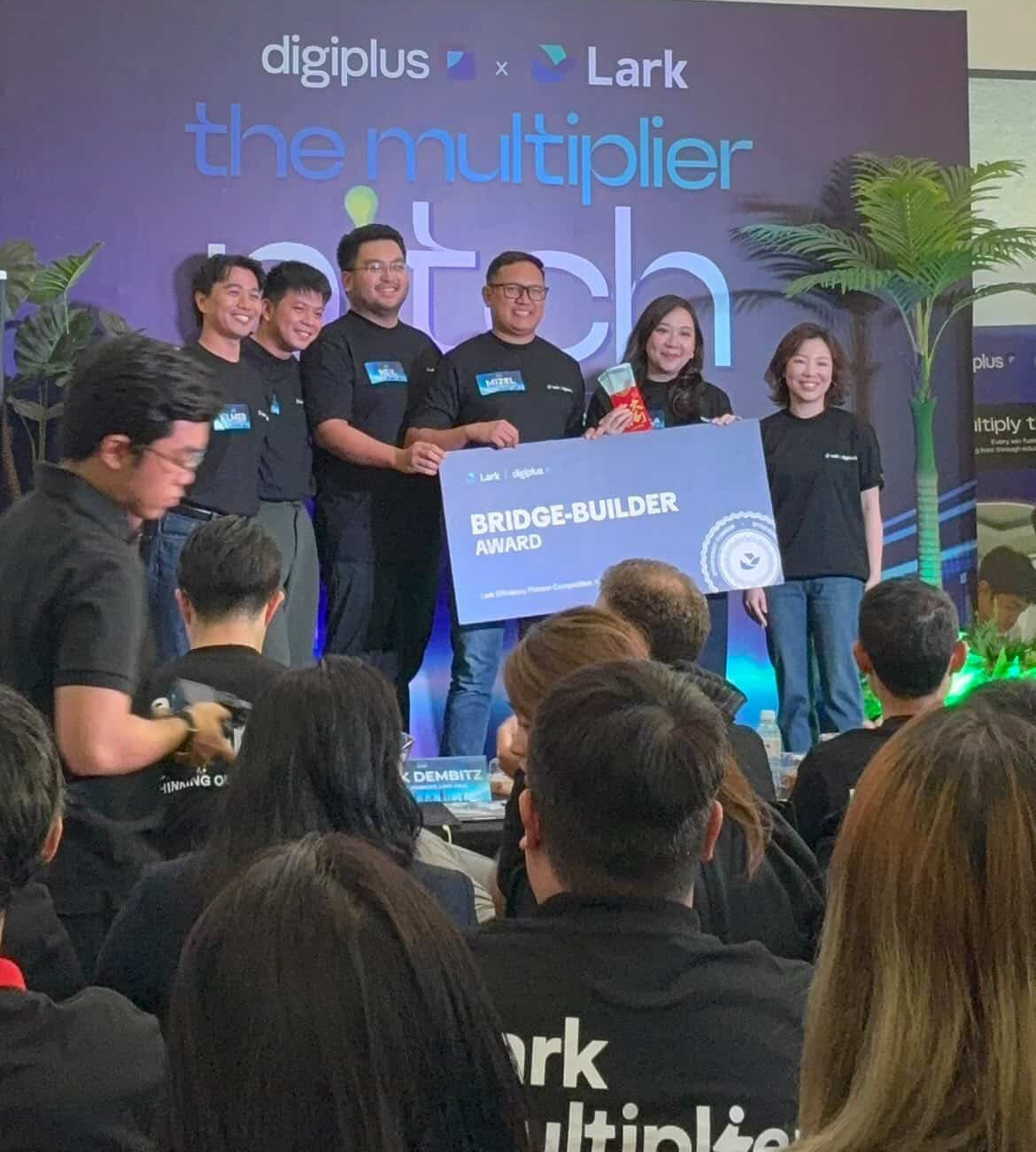
More than a competition, it gave us an opportunity to challenge how we work. Our team earned the Bridge Builder Award (2nd Place) for connecting systems, teams, and processes to create scalable impact. This recognition made the experience even more meaningful.
Our idea came from a challenge we experienced at DigiPlus Foundation, the organization’s social impact arm. We work with brands such as BingoPlus, ArenaPlus, and GameZone to support communities across the Philippines. Our programs cover technology education, accessible healthcare, community resilience, and inclusive empowerment.
These initiatives include scholarships, classroom construction, medical missions, disaster response, and livelihood support. However, every project requires documentation, budget approvals, reporting, and compliance with relevant PAGCOR requirements. These safeguards promote accountability, but disconnected workflows can slow down implementation. As a result, teams sometimes face delays, duplicated tasks, and coordination challenges.
Building a Smarter CSR Workflow Automation System
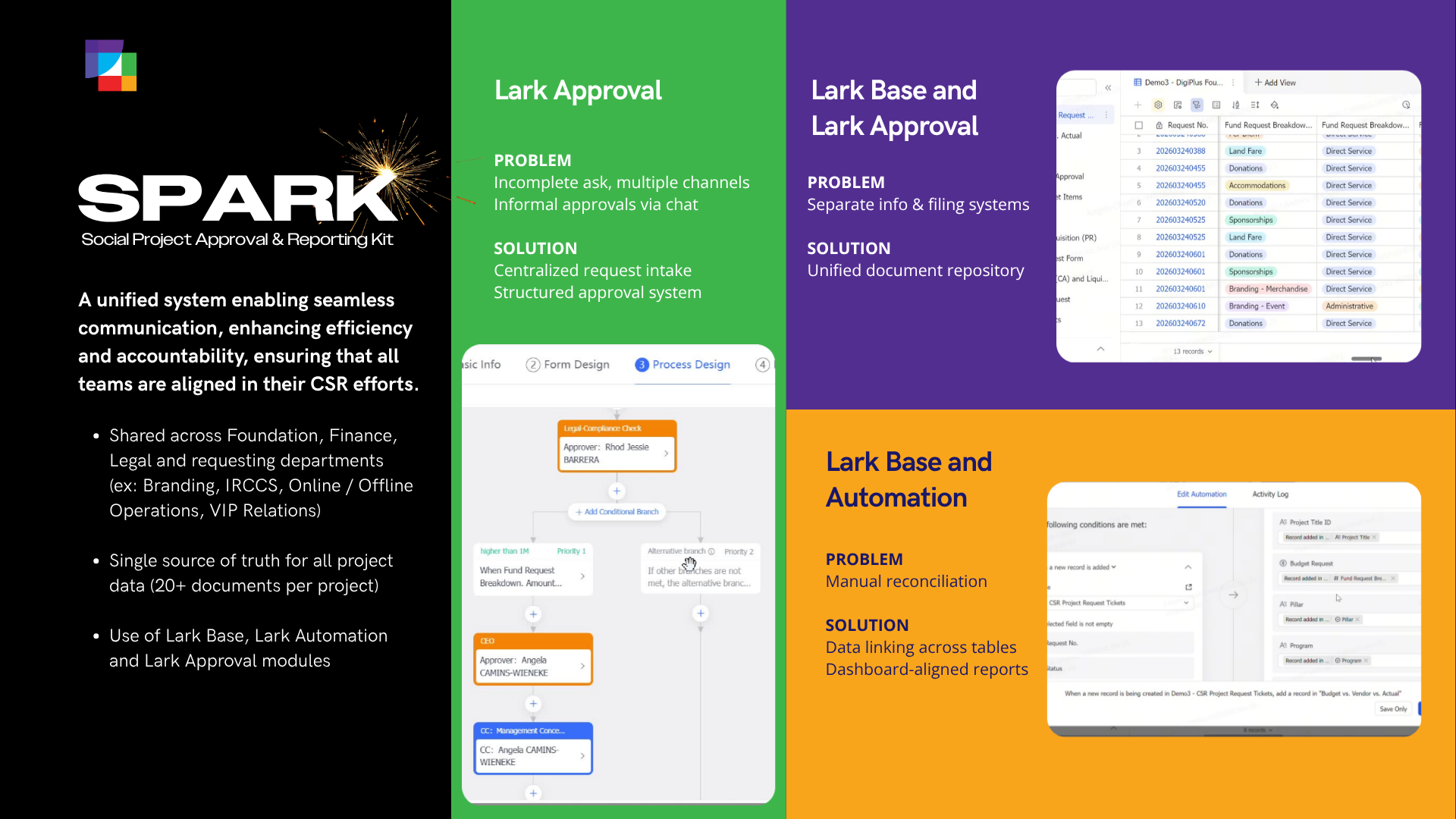
We realized that our challenge wasn’t a lack of commitment or resources. Instead, we needed a unified system that would help teams collaborate more efficiently. This led us to develop a CSR workflow automation solution using Lark. We designed structured forms to standardize collaboration requests and capture complete information. Centralized workflows also made approvals easier to track while supporting compliance requirements.
The system organized project information in one place, improving visibility and reporting accuracy. Integrated dashboards helped teams monitor activities, assess results, and review social impact and ROI. By connecting previously separate processes, we also reduced our reliance on manual tracking and disconnected tools.
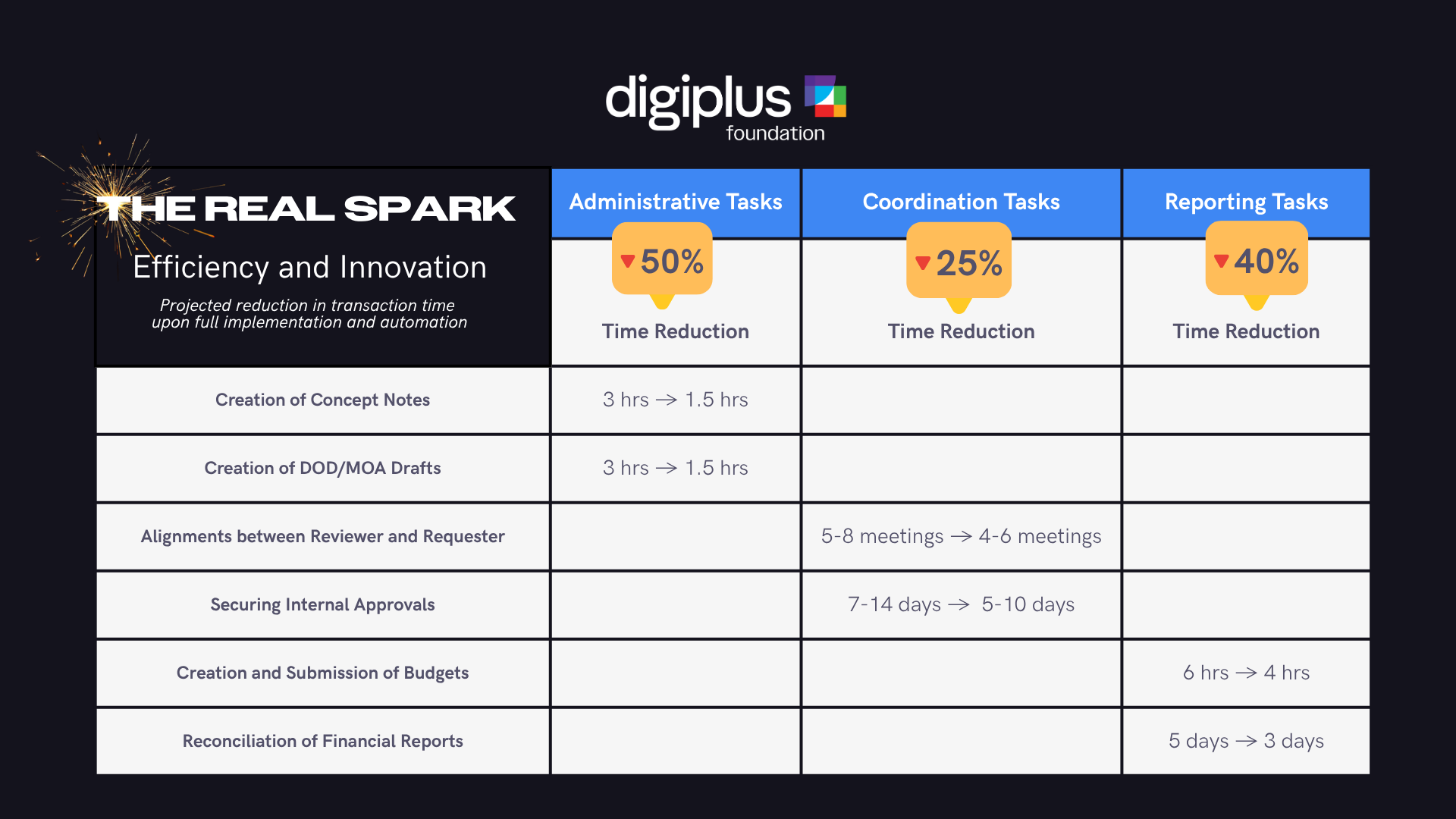
More importantly, the system helped bridge gaps between departments. Teams could coordinate through a shared workflow instead of relying on scattered conversations and repeated follow-ups. Our solution demonstrated the potential to reduce administrative workload by up to 50% while maintaining governance standards. With fewer process bottlenecks, initiatives that previously required weeks of coordination could move forward much faster.
From Process Improvement to Meaningful Impact
At its core, our solution aimed to help DigiPlus Foundation deliver social impact with greater speed and precision. By simplifying internal processes, we could reduce the administrative work behind every initiative. In turn, our teams and partner brands could respond more quickly to community needs. Faster processes meant more time and resources could go toward helping people.
I’m grateful to have worked with a team that continuously challenged how we operated. Together, we explored ways to make our work more efficient without compromising accountability. This experience strengthened my belief in combining strategic thinking with practical execution. Rather than adding complexity, we focused on identifying bottlenecks and developing sustainable solutions.
Receiving the Bridge Builder Award made the experience even more rewarding. Beyond the recognition, it reflected the value of teamwork and shared problem-solving. We demonstrated how connecting people, systems, and processes could help an organization work toward a common purpose.
Ultimately, this experience reminded me that innovation doesn’t always mean inventing something new. Sometimes, meaningful progress comes from improving what already exists. For DigiPlus Foundation, CSR workflow automation offered a practical way to simplify operations and strengthen collaboration. More importantly, it helped us focus on what truly matters: delivering help where it is needed, when it is needed.